[  Mood: Amused ]
The summary of this article pretty much says it all:
| Quote: |
| SUMMARY: Researchers find that men who masturbate frequently are at a reduced risk of cancer. |

Both fun AND good for you was originally published on The Geek Curmudgeon

[ Mood: Amused ]
The summary of this article pretty much says it all:
| Quote: |
| SUMMARY: Researchers find that men who masturbate frequently are at a reduced risk of cancer. |
Both fun AND good for you was originally published on The Geek Curmudgeon
[ Mood: Amused ]
The summary of this article pretty much says it all:
| Quote: |
| SUMMARY: Researchers find that men who masturbate frequently are at a reduced risk of cancer. |
When Jeff VanderMeer asked me to guest blog for him back in October, one of his requests was to continue his recently started series “Conversations with the Bookless,” discussions with short story writers who had yet to have their own books. My first interview was with Scott A. Cupp. Not only did Scott fulfill the criteria but he was one of the more unique and creative talents that most people had never heard of. I wrote this about Scott:
| Quote: |
| A quintessential Texas short story writer, Scott A. Cupp produces unusual slipstream tales steeped in Texas culture and history. Perhaps best known for his heretical “Thirteen Days of Glory,” a re-imagining of the Battle of the Alamo as a struggle for transvestite rights, Cupp, a former Campbell award nominee, continues to experiment and press the outer boundaries of the absurd with tales such as “King of the Cows”, “The Singing Cowboy’s Apprentice” and “One Fang.” |
Nothing has really changed except now Scott has a webpage with a complete bibliography and links to online stories. If you’ve never experienced the artistic joy that is Scott A. Cupp, now is your chance.
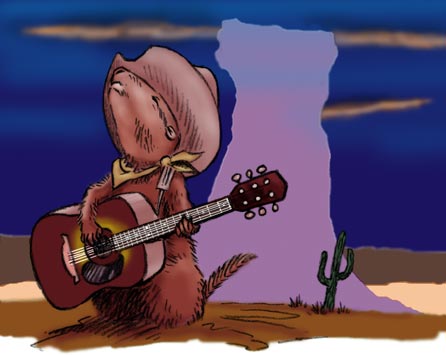
Frequent RevSF contributor Scott A. Cupp now has a webpage was originally published on The Geek Curmudgeon
When Jeff VanderMeer asked me to guest blog for him back in October, one of his requests was to continue his recently started series "Conversations with the Bookless," discussions with short story writers who had yet to have their own books. My first interview was with Scott A. Cupp. Not only did Scott fulfill the criteria but he was one of the more unique and creative talents that most people had never heard of. I wrote this about Scott:
| Quote: |
| A quintessential Texas short story writer, Scott A. Cupp produces unusual slipstream tales steeped in Texas culture and history. Perhaps best known for his heretical “Thirteen Days of Glory,” a re-imagining of the Battle of the Alamo as a struggle for transvestite rights, Cupp, a former Campbell award nominee, continues to experiment and press the outer boundaries of the absurd with tales such as “King of the Cows”, “The Singing Cowboy’s Apprentice” and “One Fang.” |
Nothing has really changed except now Scott has a webpage with a complete bibliography and links to online stories. If you’ve never experienced the artistic joy that is Scott A. Cupp, now is your chance.
At last weekend’s New York Comic Con, Venture Bros. writers Christopher McCulloch (better known as his pseudonym Jackson Publick) and Doc Hammer revealed some Season 3 footage and answered some fan questions. I wasn’t there but thankfully Comic Book Resources reporter Jonathan Callan chronicled the event.
| Quote: |
| “We have a clip from the third season,” McCulloch said. “Do you want to see it?” The room roared with applause. Dispensing with any further formalities, McCulloch started the preview as the room darkened. Scenes from the video included Brock with his Office of Secret Intelligence (OSI) mentor Hunter, last seen in season two’s “Assassinanny 911,” the return of The Pirate Guy from “Ghosts of the Sargasso,” a disturbingly Freudian sequence involving Doctor Venture and his heroic father’s large penis, and a gorey “GI Joe” satirizing OSI sequence. |

| Quote: |
| One pair dressed as The Monarch and Doctor Girlfriend even asked Doc Hammer to marry them at their upcoming ceremony. “Give me the invitation. I’ll commit to thinking about it. At the very least I’ll give it a firm maybe,” he said. Another pair, dressed as Trianna and Dean Venture, asked if Hank and Dean would ever hook up. “You could see that right now,” joked Michael Sternikilis [voice of Dean Venture] as he raised his eyebrows at the girl. “No,” said Doc Hammer answering seriously. “If you bring those two together too quick, it ruins the dramatic strain of it.”
“You don’t know though,” Christopher McCulloch said. “Dean could get her knocked up this season for all you know.” |

| Quote: |
| “What is the most significant way the show has changed?” One fan asked. “It wasn’t canceled after the first season,” was McCulloch’s simple answer. “Are Dr. Venture and the Monarch brothers?” Another asked, speculating on the plot. “Not yet,” McCulloch answered. |

| Quote: |
| One of the last questions was why Brock couldn’t simply rip open Molatov Cocktail’s chastity belt. “Because it’s a symbol!” Doc Hammer answered. “What’s stopping you from getting laid? It’s a conversation, someone has to invite you. But she’s not ready. Could he rip it open? Brock could rip that thing off with his teeth and he will! Rip that thing off and go back for seconds!” |
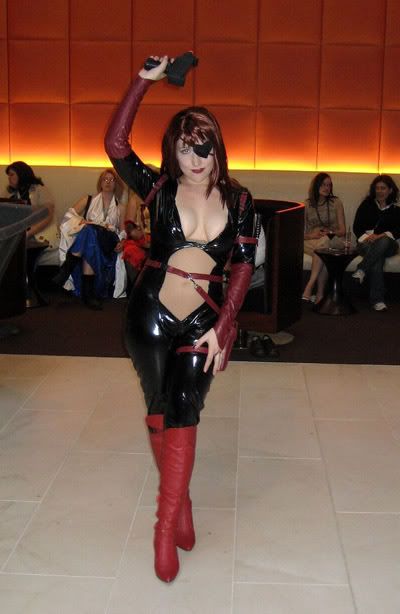
Dude, I can’t wait for Season 3!
UPDATE: Season 3 Preview posted at Geekanerd.
Venture Bros Season 3 Panel was originally published on The Geek Curmudgeon
At last weekend’s New York Comic Con, Venture Bros. writers Christopher McCulloch (better known as his pseudonym Jackson Publick) and Doc Hammer revealed some Season 3 footage and answered some fan questions. I wasn’t there but thankfully Comic Book Resources reporter Jonathan Callan chronicled the event.
| Quote: |
| "We have a clip from the third season," McCulloch said. "Do you want to see it?" The room roared with applause. Dispensing with any further formalities, McCulloch started the preview as the room darkened. Scenes from the video included Brock with his Office of Secret Intelligence (OSI) mentor Hunter, last seen in season two’s "Assassinanny 911," the return of The Pirate Guy from "Ghosts of the Sargasso," a disturbingly Freudian sequence involving Doctor Venture and his heroic father’s large penis, and a gorey "GI Joe" satirizing OSI sequence. |
| Quote: |
| One pair dressed as The Monarch and Doctor Girlfriend even asked Doc Hammer to marry them at their upcoming ceremony. "Give me the invitation. I’ll commit to thinking about it. At the very least I’ll give it a firm maybe," he said. Another pair, dressed as Trianna and Dean Venture, asked if Hank and Dean would ever hook up. "You could see that right now," joked Michael Sternikilis [voice of Dean Venture] as he raised his eyebrows at the girl. "No," said Doc Hammer answering seriously. "If you bring those two together too quick, it ruins the dramatic strain of it."
"You don’t know though," Christopher McCulloch said. "Dean could get her knocked up this season for all you know." |
| Quote: |
| "What is the most significant way the show has changed?" One fan asked. "It wasn’t canceled after the first season," was McCulloch’s simple answer. "Are Dr. Venture and the Monarch brothers?" Another asked, speculating on the plot. "Not yet," McCulloch answered. |
| Quote: |
| One of the last questions was why Brock couldn’t simply rip open Molatov Cocktail’s chastity belt. "Because it’s a symbol!" Doc Hammer answered. "What’s stopping you from getting laid? It’s a conversation, someone has to invite you. But she’s not ready. Could he rip it open? Brock could rip that thing off with his teeth and he will! Rip that thing off and go back for seconds!" |
Dude, I can’t wait for Season 3!
UPDATE: Season 3 Preview posted at Geekanerd.
Yesterday at the Ritz, the fancy new downtown home of the Alamo Drafthouse, I attended my first big screen showing of the original 1968 Planet of the Apes. Using a new 35mm print from the original negatives, the movie screening was flawless with bright colors and fantastic sound. The action and overblown dialog literally screamed delightfully off the the giant screen. Charlton Heston has never looked so dynamic or sounded so forceful. The 40+ year old makeup effects remain effective and vibrant. The viewing further reinforced my love for this very influential film.

Plant of the Apes spawned four sequels, a television series, an animated series, action figures, books, comic books, a subpar 2001 remake, and many Simpsons parodies. A dystopian reflection of American society in the 1960s, real strength is the brilliant Michael Wilson and Rod Serling script, which was loosely based on Pierre Boulle’s Swiftian satire La Planete des Signes (Monkey Planet). The most original shock-ending of all time cements this movie’s place in film history.
The actual making of the Planet of the Apes is a fascinating story unto itself with several books and even a documentary on the subject. When producer Arthur P. Jacobs acquired the book rights, no one would take him seriously until Warner Brothers decided to take a chance with Blake Edwards (of Pink Panther fame) directing. Edwards first task was contacting the legendary Twilight Zone creator Rod Serling about writing the screenplay. For the next two years, Serling toiled with the screenplay while Jacobs secured funding for the feature. Michael Wilson was brought in to work on the screenplay as well. Although the two men never met, they crafted one of the finest film adaptations of all time.

While Serling and Wilson polished the script, Jacobs searched for a lead actor. He interviewed Marlon Brando, Burt Lancaster, Paul Newman, Jack Lemmon, and Rock Hudson. They all turned him down. Charlton Heston, who was already famous for playing larger than life characters, did not. When Warner Brothers learned the proposed budget of the movie could top $7 million, they opted out of the film, taking Edwards with them. Richard Zanuck of Twentieth Century Fox stepped in but not without reservations. He was concerned about the believability of the intelligent apes. After viewing a five-minute test film of Edgar G. Robinson as Dr. Zaius, Zanuck decided to go ahead with the project. Ironically, it was during the test that Robinson determined he was reluctant to endure the long, rigorous transformations that the role required. He was replaced by Maurice Evans.
Planet of the Apes premiered in 1968 to rave reviews and was a huge box office success. John Chambers, Ben Nye, and Dan Striepeke won a special Oscar for the makeup. By the mid-seventies there were five Ape movies, a television show, an animated series, and a plethora of other merchandise available.
Planet of the Apes with its line of action figures, books, and comics was the template used to even greater success by George Lucas upon the release of Star Wars. That model has been used by nearly every major science fiction movie ever since.
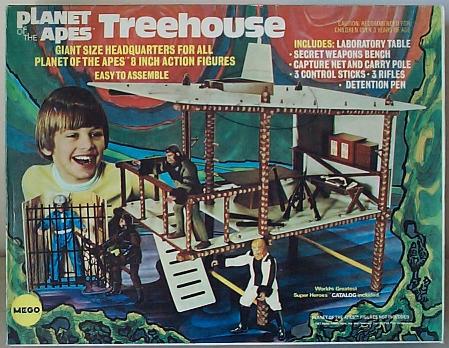
The Origin of the Planet of the Apes was originally published on The Geek Curmudgeon
Yesterday at the Ritz, the fancy new downtown home of the Alamo Drafthouse, I attended my first big screen showing of the original 1968 Planet of the Apes. Using a new 35mm print from the original negatives, the movie screening was flawless with bright colors and fantastic sound. The action and overblown dialog literally screamed delightfully off the the giant screen. Charlton Heston has never looked so dynamic or sounded so forceful. The 40+ year old makeup effects remain effective and vibrant. The viewing further reinforced my love for this very influential film.
Plant of the Apes spawned four sequels, a television series, an animated series, action figures, books, comic books, a subpar 2001 remake, and many Simpsons parodies. A dystopian reflection of American society in the 1960s, real strength is the brilliant Michael Wilson and Rod Serling script, which was loosely based on Pierre Boulle’s Swiftian satire La Planete des Signes (Monkey Planet). The most original shock-ending of all time cements this movie’s place in film history.
The actual making of the Planet of the Apes is a fascinating story unto itself with several books and even a documentary on the subject. When producer Arthur P. Jacobs acquired the book rights, no one would take him seriously until Warner Brothers decided to take a chance with Blake Edwards (of Pink Panther fame) directing. Edwards first task was contacting the legendary Twilight Zone creator Rod Serling about writing the screenplay. For the next two years, Serling toiled with the screenplay while Jacobs secured funding for the feature. Michael Wilson was brought in to work on the screenplay as well. Although the two men never met, they crafted one of the finest film adaptations of all time.
While Serling and Wilson polished the script, Jacobs searched for a lead actor. He interviewed Marlon Brando, Burt Lancaster, Paul Newman, Jack Lemmon, and Rock Hudson. They all turned him down. Charlton Heston, who was already famous for playing larger than life characters, did not. When Warner Brothers learned the proposed budget of the movie could top $7 million, they opted out of the film, taking Edwards with them. Richard Zanuck of Twentieth Century Fox stepped in but not without reservations. He was concerned about the believability of the intelligent apes. After viewing a five-minute test film of Edgar G. Robinson as Dr. Zaius, Zanuck decided to go ahead with the project. Ironically, it was during the test that Robinson determined he was reluctant to endure the long, rigorous transformations that the role required. He was replaced by Maurice Evans.
Planet of the Apes premiered in 1968 to rave reviews and was a huge box office success. John Chambers, Ben Nye, and Dan Striepeke won a special Oscar for the makeup. By the mid-seventies there were five Ape movies, a television show, an animated series, and a plethora of other merchandise available.
Planet of the Apes with its line of action figures, books, and comics was the template used to even greater success by George Lucas upon the release of Star Wars. That model has been used by nearly every major science fiction movie ever since.
Over at the entertaining blog Comics Should Be Good, some 700 comic book fans submitted their ten favorite comic book runs. Here are the results, broken into easily digestible five entry chunks. As of this posting, #100-#51 have been announced. It appears they are posting two entries a day.
Some interesting findings so far:

*Two Roger Stern runs (58. Avengers #227-279, 281-288 and 55. Amazing Spider-Man #224-227, 229-252)
*The shockingly meager rankings of League of Extraordinary Gentleman at #64, Kirkman’s Invincible at #76, and Lee and Ditko’s Dr. Strange at #88.

*The fact that Christopher Priest’s Black Panther even made the list (73). It is easily the worst book mentioned so far.
*Preponderance X-books:
81. Peter Milligan and Mike Allred X-Force #116-129, X-Statix #1-26
74. Chris Claremont and Alan Davis Excalibur #1-24, 42-52, 54-58, 61-67
71 (tie). Chris Claremont and Paul Smith Uncanny X-Men #165-170, 172-175
71 (tie). Chris Claremont and Marc Silvestri Uncanny X-Men #218, 220-222, 224-227, 229-230, 232-234, 236, 238-244, 246-247, 249-251, 253-255, 259-261
69. Peter David X-Factor #70-90
66. Chris Claremont Marvel Graphic Novel #4, New Mutants #1-54, Annuals #1-3

I’m definitely curious about the rest of the list.
Top 100 Comic Book Runs was originally published on The Geek Curmudgeon
Over at the entertaining blog Comics Should Be Good, some 700 comic book fans submitted their ten favorite comic book runs. Here are the results, broken into easily digestible five entry chunks. As of this posting, #100-#51 have been announced. It appears they are posting two entries a day.
Some interesting findings so far:
*Two Roger Stern runs (58. Avengers #227-279, 281-288 and 55. Amazing Spider-Man #224-227, 229-252)
*The shockingly meager rankings of League of Extraordinary Gentleman at #64, Kirkman’s Invincible at #76, and Lee and Ditko’s Dr. Strange at #88.
*The fact that Christopher Priest’s Black Panther even made the list (73). It is easily the worst book mentioned so far.
*Preponderance X-books:
81. Peter Milligan and Mike Allred X-Force #116-129, X-Statix #1-26
74. Chris Claremont and Alan Davis Excalibur #1-24, 42-52, 54-58, 61-67
71 (tie). Chris Claremont and Paul Smith Uncanny X-Men #165-170, 172-175
71 (tie). Chris Claremont and Marc Silvestri Uncanny X-Men #218, 220-222, 224-227, 229-230, 232-234, 236, 238-244, 246-247, 249-251, 253-255, 259-261
69. Peter David X-Factor #70-90
66. Chris Claremont Marvel Graphic Novel #4, New Mutants #1-54, Annuals #1-3
I’m definitely curious about the rest of the list.