Who reads the Watchmen?

My guide for non-geeks to the Watchmen graphic novel appeared in today’s San Antonio Current.

Quote:
In 1986, DC comic books ran advertisements featuring new costumed characters, and asked, forebodingly, “Who Watches the Watchmen?” Later that year, Watchmen, written by Alan Moore and drawn by Dave Gibbons, premiered, forever changing both comics and film.


As is typical with my articles, I included some historical trivia.

Quote:
After DC acquired the rights to the little-known Charlton Comics’ line of superhero characters in 1983, rising star Moore developed a series to showcase the heroes. DC managing editor Dick Giordano rejected the unsolicited proposal, but encouraged Moore to rework the idea employing original characters. Joined by artist Dave Gibbons, the duo re-imagined the old heroes to suit their unique vision. Charlton’s Peacemaker, Captain Atom, Blue Beetle, Thunderbolt, and the Question evolved respectively into Comedian, Dr. Manhattan, Nite Owl, Ozymandias, and Rorschach. (Not based on a Charlton character, Silk Spectre draws inspiration from a conglomeration of female heroes.)

There’s even some literary analysis throw in.

Quote:
Initially appearing in 12 individual comic-book issues, each 32-page chapter of Watchmen (except for the final installment) offered 25-28 pages of sequential story followed by prose text that enhanced or clarified the complex tale. Commonplace in comics since the 1940s, extensive text rarely formed an integral aspect of the overall tale. Usually, they were stand-alone pieces of short fiction featuring the lead character or, in the case of themed anthologies, functioned as a bonus story. To fully enjoy, and at times even comprehend, Moore’s multilayered epic, all the text pieces need to be read in the order they appear and considered within the larger work. The seemingly random, incongruous prose plays an essential role in the overall narrative.

Check out the rest of the article.

To Hell With Alan Moore

For my latest Nexus Graphica column, I revised and updated the "To Hell With Alan Moore" article, my 2006 history of the films based on the works of Alan Moore that originally appeared in Moving Pictures.

Quote:
Alan Moore (along with Sin City creator Frank Miller) injected relevancy into mainstream comics in the 80s. Previously, comic books lagged some five to six years behind current trends. Moore’s skills moved mainstream superhero comics ahead of popular culture and established new trends, the punk to the old guard’s rock ‘n’ roll. His success paved the way for artists such as Moore protégé Neil Gaiman and Mike Mignola (Hellboy creator), as well as the re-tooling of superheroes that lead to this century’s spate of successful films such as the Spider-Man franchise, the X-Men series, Iron Man, and even The Incredibles.

Not only did I revise large chunks of the original text and correct a factual error, but I expanded the piece to include my thoughts on the V For Vendetta movie and included some observations about the forthcoming Watchmen film.

Quote:
A movie based on Moore’s arguably most nihilistic work, V for Vendetta (1990), premiered in March 2006 starring Natalie Portman. Originally published serially during the height of the Thatcher/Reagan era, V relates the anonymous struggles of an anarchist terrorist in a post-apocalyptic fascist Britain. The movie, from first-time director James McTeigue and a screenplay by the Wachowski Brothers (The Matrix), retained much of the original story’s anarchy and political references. The finest big screen Moore adaptation to date managed a respectable $132 million in total worldwide box office. Yet again, Moore asked for his name to be removed from the credits.

Books received 2/26/09

Let’s take a quick look to see what’s arrived in the mail here at the Geek Compound.

The Warded Man by Peter V. Brett

Promo copy:

The time has come to stand against the night.

As darkness falls each night, the corelings rise–demons who well up from the ground like hellish steam, taking on fearsome form and substance. Sand demons. Wood demons. Wind demons. Flame demons. And gigantic rock demons, the deadliest of all. They possess supernatural strength and powers and burn with a consuming hatred of humanity. For hundreds of years the demons have terrorized the night, slowly culling the human herd that shelters behind magical wards–symbols of power whose origins are lost in myth and mystery, and whose protection is terrifyingly fragile.

It was not always this way. Once, men and women battled the corelings on equal terms. Once, under the leadership of the legendary Deliverer, and armed with powerful wards that were not merely shields but weapons, they took the battle to the demons . . . and stopped their advance.

But those days are gone. The fighting wards are lost. Night by night the demons grow stronger, while human numbers dwindle under their relentless assault.
Now, with hope for the future fading, three young survivors of vicious demon attacks will dare the impossible, stepping beyond the crumbling safety of the wards to risk everything in a desperate quest to regain the secrets of the past.

Arlen will pay any price, embrace any sacrifice, for freedom. His grim journey will take him beyond the bounds of human power.

Crippled by the demons that killed his parents, Rojer seeks solace in music–only to discover that music can be a weapon as well as a refuge.

Beautiful Leesha, who has suffered at the hands of men as well as demons, becomes an expert healer. But what cures can also harm. . . .

Together, they will stand against the night.

City without End by Kay Kenyon

Promo copy:

In this series Kay Kenyon has created her most vivid and compelling society yet, the universe Entire. Reviewers have called this "a grand world," "an enormous stage," and "a bravura concept."

On this stage unfolds a mighty struggle for dominance between two universes. Titus Quinn has forged an unstable peace with the Tarig lords. The ruinous capability of the nanotech surge weapon he possesses ensures détente. But it is a sham. In what the godwoman Zhiya calls a fit of moral goodness, he’s thrown the weapon into the space-folding waters of the Nigh. This clears the way for an enemy he could have never foreseen: the people of the Rose. A small cadre led by Helice Maki is determined to take the Entire for itself and leave the earth in ruins. The transform of earth will begin deep in a western desert and will sweep over the lives of ordinary people, entangling Quinn s sister-in-law Caitlin in a deepening and ultimate conspiracy.

In the Entire, Quinn stalks Helice to the fabled Rim City, encircling the heart of the Entire. Here he at last finds his daughter, now called Sen Ni, in the Chalin style. Outside of earth-based time, she has grown to adulthood. He hardly knows her, and finds her the mistress of a remarkable dream-time insurgency against the Tarig lords and more, a woman risen high in the Entire’s meritocracy. Quinn needs his daughter’s help against the woman who would destroy the earth. But Sen Ni has her own plans and allies, among them a boy-navitar unlike any other pilot of the River Nigh a navitar willing and supremely able to break his vows and bend the world.

Quinn casts his fate with the beautiful and resourceful Ji Anzi who sent on a journey to other realms holds the key to Quinn’s heart and his overarching mission. But as he approaches the innermost sanctuary of the Tarig, he is alone. Waiting for him are powerful adversaries, including a lady who both hates and loves him, the high prefect of the dragon court, and Quinn’s most implacable enemy, a warrior whose chaotic mind will soon be roused from an eternal slumber.
Shadow Valley by Steven Barnes

Promo copy:

In the great tradition of Jean Auel, this novel—the sequel to Great Sky Woman—imagines life in prehistoric Africa

Thirty thousand years ago, in the shadow of Kilimanjaro…

Since the beginning of time, the peaceful Ibandi people had been sheltered by their god-mountains, Great Earth and Great Sky. When the savage Mk*tk threatened their way of life, their gods told Sky Woman—last of the true Dream Dancers—and her mate Frog Hopping to take the people north in search of new lands. As the Ibandi meet strange new peoples and discover a land of promise and plenty, the deeds of a man thought long dead will rouse the Mk*tk to a bloody frenzy and send them on a quest for vengeance that could shatter the Ibandi’s dreams. All is lost . . . unless Sky Woman can regain her power, unless Frog Hopping can become the first true warrior, and unless a dead man can find the heart to forgive. All their fates, and more, will be decided in the place called Shadow Valley.

Cyberabad Days by Ian McDonald

Promo copy:

Ian McDonald’s River of Gods called a "masterpiece" by Asimov’s Science Fiction and praised by the Washington Post as a –"major achievement from a writer who is becoming one of the best SF novelists of our time"– painted a vivid picture of a near future India, 100 years after independence. It revolutionized SF for a new generation by taking a perspective that was not European or American. Nominated for the Hugo Award and the Arthur C. Clarke Award, and winning the BSFA Award, the rich world of this novel has inspired McDonald to revisit its milieu in a series of short stories, all set in the world of River of Gods.

Cyberabad Days is a triumphant return to the India of 2047, a new, muscular superpower of one and a half billion people in an age of artificial intelligences, climate-change induced drought, water-wars, strange new genders, genetically improved children that age at half the rate of baseline humanity, and a population where males outnumber females four to one. India herself has fractured into a dozen states from Kerala to the headwaters of the Ganges in the Himalayas.

Cyberabad Days is a collection of seven stories, one Hugo nominee and one Hugo winner among them, as well as a thirty-one-thousand word original novella. As with everything Ian McDonald does, it is sure to be one of the most talked about books of the year.

Watchmen: An Ignorant Reviewer’s Take

While I believe the Watchmen movie will NOT be very good (though I’m willing to be proven wrong), I hoped if nothing else that we moved beyond this type of ignorant review when covering anything comic book related. Kevin Maher of The Times heaps lavish praise upon Snyder’s adaptation calling it "a mesmerising and brutalising experience, and will be, for some at least, more than worth the wait."

He also declares it "a movie that is reaching utterly beyond the confines of its genre." And then ends his piece with this patently incorrect statement: "But as the first attempt to make a truly post-adolescent comic book movie, Watchmen is, literally, peerless."

What confines? As writers like Alan Moore have proven time and time again, all types of stories–from action/adventure to historical to comedic and all in-between–can be told in the comics medium.

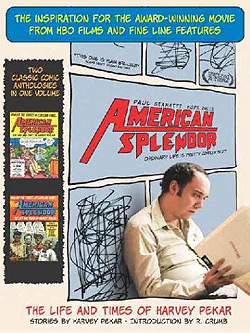
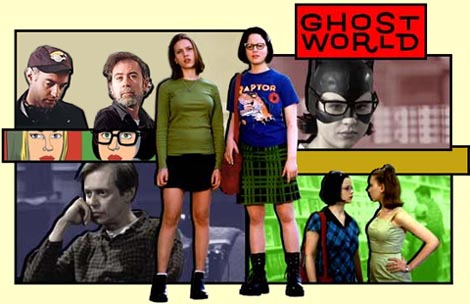
And post-adolescent comic book movies? Clearly, Mr. Maher has never seen or even heard of American Splendor or Ghost World. Two definitely "post-adolescent" comics that were made into creatively successful, mature films.

Books received 2/23/09– The Fantagraphics edition

Let’s take a quick look to see what’s arrived in the mail here at the Geek Compound.

An amazing trio of sensational Fantagraphics titles this time!

Humbug by Harvey Kurtzman, Jack Davis, Will Elder, Al Jaffee, and Arnold Roth

Promo copy:

Harvey Kurtzman changed the face of American humor when he created the legendary MAD comic. As editor and chief writer from its inception in 1952, through its transformation into a slick magazine, and until he left MAD in 1956, he influenced an entire generation of cartoonists, comedians, and filmmakers. In 1962, he co-created the long-running Little Annie Fanny with his long-time artistic partner Will Elder for Playboy, which he continued to produce until his virtual retirement in 1988.

Between MAD and Annie Fanny, Kurtzman’s biographical summaries will note that he created and edited three other magazines, Trump, Humbug, and Help!, but, whereas his MAD and Annie Fanny are readily available in reprint form, his major satirical work in the interim period is virtually unknown. Humbug, which had poor distribution, may be the least known, but to those who treasure the rare original copies, it equals or even exceeds MAD in displaying Kurtzman’s creative genius. Humbug was unique in that it was actually published by the artists who created it: Kurtzman and his cohorts from MAD Will Elder, Jack Davis, and Al Jaffee, were joined by universally acclaimed cartoonist Arnold Roth. With no publisher above them to rein them in, this little band of creators produced some of the most trenchant and engaging satire of American culture ever to appear on American newsstands. At last, the entire run of 11 issues of Humbug is being reprinted in a deluxe format, much of it reproduced from the original art, allowing even owners of the original cheaply-printed issues to experience the full impact for the first time.

Boody: The Bizarre Comics of Boody Rogers

Promo copy:

You’ve met Fletcher Hanks. Now meet Boody Rogers! Fans of Boody Rogers’ Golden age comic-book stories span generations of cartoonists, from Robert Williams to Art Spiegelman to Johnny Ryan. Spiegelman printed Rogers’ work in RAW magazine and recently it also appeared in the anthology book Art Out of Time: Unknown Comic Visionaries (Abrams). Here at last is a single book – Boody: The Bizarre Comics of Boody Rogers – devoted to this cult comics hero, collecting Roger’s best Sparky Watts , Babe and Dudley stories, as well as much more. This beautifully designed tome also has tons of vintage photos and unpublished art (including art from the first modern newsstand comic book that Rogers did in 1935). It all begins with a career spanning fun and fascinating interview with the late Rogers, by editor Craig Yoe (Arf).

Supermen!: The First Wave of Comic Book Heroes 1936-1941 Edited by Greg Sadowski Foreword by Jonathan Lethem

Promo copy:

The enduring cultural phenomenon of comic book heroes was invented in the late 1930s by a talented and hungry group of artists and writers barely out of their teens, flying by the seat of their pants to create something new, exciting, and above all profitable. The iconography and mythology they created flourishes to this day in comic books, video, movies, fine art, advertising, and practically all other media. Supermen! collects the best and the brightest of this first generation, including Jack Cole, Will Eisner, Bill Everett, Lou Fine, Fletcher Hanks, Jack Kirby, Jerry Siegel, Joe Shuster, and Basil Wolverton. If the reader is expecting to find an All-American group of altruistic do-gooders, he in for quite a jolt. As Jonathan Lethem writes in his Foreword, “A collection like Supermen! works like a reverse-neutron bomb to assumptions about the birth of the superhero image: it tears down the orderly structures of theory and history and leaves the figures standing in full view, staring back at us in all their defiant disorienting particularity, their blazing strangeness.” Beautifully designed and produced in full color, Supermen! contains twenty full-length stories, ten full-sized covers, a generous selection of vintage promotional ads, and comprehensive end notations by editor Greg Sadowski, making it indispensable to anyone interested in the origins of superheroes and the history of the comic book form.

Books received 2/23/09

Let’s take a quick look to see what’s arrived in the mail here at the Geek Compound.

Dandelion Fire: Book 2 of the 100 Cupboards by N. D. Wilson

Promo copy:

Henry York never dreamed his time in Kansas would open a door to adventure—much less a hundred doors. But a visit to his aunt and uncle’s farm took an amazing turn when cupboard doors, hidden behind Henry’s bedroom wall, revealed themselves to be portals to other worlds. Now, with his time at the farm drawing to a close, Henry makes a bold decision—he must go through the cupboards to find the truth about where he’s from and who his parents are. Following that trail will take him from one world to another, and ultimately into direct conflict with the evil of Endor.

Flinx Transcendent by Alan Dean Foster

Promo copy:

After thirty-five years and more than a dozen Pip & Flinx novels, Alan Dean Foster delivers the final installment in this hugely popular series

From science fiction icon Alan Dean Foster comes the highly anticipated final Pip & Flinx adventure for fans of the green-eyed redhead with awesome mental powers and his miniature flying dragon. In this dazzling novel Foster answers all the questions that his fans have been asking about their favorite hero over the years, while saving the universe in the process.

Flinx Transcendent wraps up the storylines that Alan Dean Foster has been weaving through thirteen Pip & Flinx novels. Twice as long as any previous book in the series, this represents a major milestone in science fiction publishing.

The Island by Tim Lebbon

Promo copy:

Kel Boon was once an agent of the land’s most secret organization, tracking and eliminating the Strangers from beyond Noreela. But then one horrifying encounter left his superior officer–and lover–dead, along with many innocents. Kel has been running ever since, hiding out as a simple wood-carver in the fishing village of Pavmouth Breaks. But when a mysterious island appears during a cataclysmic storm, sending tidal waves to smash the village, his training tells him to expect the worst. How can he war the surviving villagers that the visitors may not be the peace-loving pilgrims they claim to be? That this might be invasion he has long feared…and that he may be Noreela’s last chance?

From the cutting room floor: Brode meets Serling

Usually due to space limitations, some of the more interesting elements of many of my interviews end up on the cutting room floor before publication. For example, in my recent interview with Douglas Brode about the book Rod Serling and the Twilight Zone: The Official 50th Anniversary Tribute, I couldn’t include the entire story about his first meeting with Rod Serling.

Here is the complete unexpurgated tale:

“As he was getting ready to leave, I just walked up to him,‘Mr. Serling, I’m Doug Brode. I’m one of the new professors here. I would love to do an interview and article with you.’ [At the time, Brode was a regular contributor to the now-defunct Premiere-style publication Show Magazine.] Without a moment’s hesitation, he quickly pulled out a piece of paper — didn’t have a business card — wrote down his home phone number, and said, ‘Doug, I’m gonna be busy for the next month. If you can call me one month from today at this number, I’d love to set something up.’ Just like that, and he left. A month later to the day, I dialed the number, and an unmistakable voice picks up at the other end. I started to say, ‘Mr. Serling, you probably won’t remember me.’ ‘Yeah, is this Doug?’ That’s the kind of guy he was. ‘Are you free for lunch next week?’ ‘Yeah. Sure.’ ‘Can you get down to Ithaca?’ ‘Sure’ ‘Great. Meet me at the Ithaca spa.’ ‘Fine’ Ithaca spa. So I packed up a swimming suit and a towel since I was going to the spa, right? Well, the Ithaca Spa is a little a diner. It’s just a name. I walk in with a wrapped up towel and a bathing suit I didn’t need. We sat and talked. He couldn’t have been more wonderful and open about everything. Like we were best friends. He mentored me as a writer. And just a few years later, he was dead.”

C.O.U.S.: Reflections from Rick’s Collection #20

While "researching" a recent Nexus Graphica, I had reason to look through my collection of Comics Of Unusual Size. This set of the big and small and odd of comicdom offers many gems. Deciding that I really should share some of these largely forgotten and sometime rare pieces, I’m taking you through a tour of the more interesting selections.

Click on images for full sized versions.


Here Comes… Daredevil (Lancer Books, 1967)
Art uncredited but most likely John Romita

Continuing my tour through some of the more mainstream selections. Throughout the sixties, seventies, and eighties, Marvel produced several mass market (or pocket-sized) paperbacks reprinting several of their titles. The first of these collections were published by Lancer, 1966-67. The books included two Fantastic Four volumes and one each of Spider-man, Thor, Hulk, and Daredevil. The black & white pages were roughly 1/3 the size of a standard comic and had to be read sideways.


Interiors to Here Comes… Daredevil (Lancer Books, 1967)
Script by Stan Lee Art by John Romita


Conan, Volume One (Grosset & Dunlap, 1978) and Conan, Volume Two (Grosset & Dunlap, 1978)
Art by Barry Smith

Then in 1977, Pocket began their ten volume reprints of Marvel favorites: Three Spider-Man, one Captain America, two Doctor Strange, one Fantastic Four, two Hulk, and one Spider-Woman. All but the Spider-Woman were in full color. Grosset & Dunlap’s Tempo Star six volume full-color reprints of Conan the Barbarian appeared in 1978-79. Both lines chopped up the pages to make them fit on the pocket-sized pages. The color printing for the Conan volumes were particularly well done.


Conan, Volume Three (Grosset & Dunlap, 1978) and Conan, Volume Four (Grosset & Dunlap, 1978)
Art by Barry Smith


Interiors to Conan, Volume Two (Grosset & Dunlap, 1978)
Script by Roy Thomas Art by Barry Smith and Sal Buscema
from the "The Tower of the Elephant" by Robert E. Howard

In eighties Marvel began producing their own line of black & white mass market paperback titles under the banner of Marvel Illustrated Books. This series included the usual culprits of Spider-Man, Fantastic Four, Daredevil, Hulk and Captain America with the Avengers and the newly-popular X-Men thrown in. Much like the Pocket and Tempo books, these volumes chopped up the pages to accommodate the mass market size.


Stan Lee Presents The Marvel Comics Illustrated Version of Daredevil (Marvel Comics Group, November 1982 Art by Bob Larkin)
Stan Lee Presents The Marvel Comics Illustrated Version of The X-Men (Marvel Comics Group, March 1982 Art by Dave Cockrum)


Interiors to Stan Lee Presents The Marvel Comics Illustrated Version of Daredevil (Marvel Comics Group, November 1982)
Script by Stan Lee Art by Wally Wood

Much like the DC digests, these books introduced me to several influential bits of comic book history including the legendary Giant-Size X-Men #1 and the incomparable Wally Wood.


Interiors to Stan Lee Presents The Marvel Comics Illustrated Version of The X-Men (Marvel Comics Group, March 1982)
Script by Len Wein Art by Dave Cockrum