The Man Who Loved Books Too Much – AQR

[ Sleepy Mood: Sleepy ]
[ Watching Sherlock Currently: Watching Sherlock ]

Author Allison Hoover Bartlett stumbled across the story of John Charles Gilkey, a rare book thief who spent years steeling books from dealers across North America. Gilkey is not a sympathetic figure. A career criminal from a dishonest family who routinely steal from each other, he seems to think that he is owed a good life. A collection of rare books is a symbol of that good life. It does not matter that the collection is funded by stolen credit cards and bad cheques. In fact, Gilkey even views some of his thefts as revenge for slights the various bookstores have given him. Slights such as keeping him on hold too long.

Through looking at Gilkey’s past, crimes and escapades, Bartlett also gives us a look at the rare book business, what makes a book rare, what makes it collectible. She also introduces us to the people who collect books and who sell them. We meet people with obsessions just as strong as Gilkey’s, but who stay on the right of the law. Most interesting among them is Ken Sanders, the rare book dealer who has made it his life’s mission to hunt down people like Gilkey and get them behind bars. She also gives a brief history of rare books and rare book thieves.

Bartlett also finds herself pulled into her story as Gilkey begins to look upon her as his confessor, if not biographer. He seems to crave the attention she gives him and at the same time desires her to chronicle his "accomplishments".

A good book that was enjoyable to listen to as an audio book.

Golden Mean – AQR

[ Sleepy Mood: Sleepy ]
[ Currently: Editing the Podcast ]
One of the challenges I have set myself this year is to read outside my comfort zone. As part of this, I have turned to awards lists for inspiration. This book was nominated for a Giller Award and Governor General’s award here in Canada. It was also frequently featured on CBC radio.

Author Annabel Lyon gives us an interesting look at life in ancient Macedonia in her novel The Golden Mean. Telling the story of the time Aristotle spent tutoring Alexander the Great, she gives us an intellectual who is clearly smarter than most and, therefor, slightly withdrawn from the world. Lyon has peppered this novel with tidbits about both the way in which the Greeks lived and what they believed in, while giving us some interesting characters.

And it is with the characters that this novel shines, as it is really low on plot. Although this book purports to be a fictionalization about the student/teacher relationship between Alexander and Aristotle, it is far more about Aristotle. Cast as the absent minded professor who seeks to place the world into the order he believes, it is through his eyes we see what action there is. We are also treated to flashbacks to various points in his life. All other characters are also seen through Aristotle’s eyes. His long suffering wife, Pythia, is a child-bride who puts up with his moods and absences. Slave Athea is upity and rude. Alexander is a complex young man who starts out as a spoiled brat, but moves slowly into being an intellectual young man who heads up a nation of warriors. Phillip is a king, used to getting what he wants.

This is a slow, moving novel that while interesting for its meticulously researched details, failed to grab me.

House of Many Ways – AQR

[ Happy Mood: Happy ]
[ Currently: About to get the boy into a bath ]
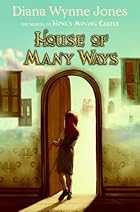
I have become quite a fan of Diana Wynne Jones. She has a body of work in the children`s fantasy relm that is rich and imaginative. She is an author who is not afraid to use main characters from previous books as spear carriers in later ones. This is true of House of May Ways.

Charmain is the only child of a baker. She is doted on, spending her days in books rather than helping around the house. That is until the day she is volunteered to look after her Great Uncle William’s house while he is away being treated for a mysterious illness. This flies in the face of her dream to work in the royal library.

Once at her uncle’s house, Charmain discovers a magical world where doors don’t always lead to the same place twice. She has to learn to navigate this world in order to help the King and his daughter find the missing Elfgift, something so important that the king has called in the famous Wizard Howl to help. Unfortunately, Howl has not come, but instead sent his wife Sofie in his place.

Charmain’s world quickly devolves into chaos as a dispute with the Kobbolds leaves dishes piling up in the sink and the laundry pile of laundry bags magically doubling overnight. She also has run-ins with insect like parasites bent on world domination and the mysterious, reclusive elves. To top it all off, a boy by the name of Peter arrives, announcing that he is that he is Uncle William’s new apprentice, threatening to dislodge Sophie from her newly earned independence.

Author Wynne-Jones has returned us to the world of Howl’s Moving Castle. This, like Castle in the Air before it, is less of a sequel and more of a revisiting of a universe where some former main characters play supporting roles. Think the Chronicles of Narnia. While not as good as the first book, House of Many Ways is much better than its immediate predecessor. Most readers will enjoy this book, but it would be a good idea to refresh your memory of the first two so you can better enjoy the cameos.

Most likely in an upcoming After Harry.

Night Rising – AQR

[ Happy Mood: Happy ]
[ Listening to My son watching Bob the Builder Currently: Listening to My son watching Bob the Builder ]
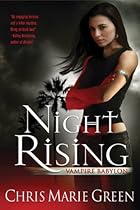
The urban fantasy genre has exploded in the last few years, leading to tens, if not hundreds of new authors entering into the genre. Not all of them are Jim Butcher or Kim Harrison. Many are like the book below, good ideas, poor execution.

Dawn Madison is a stuntwoman who has returned to LA to find her estranged father, a PI who went missing during an investigation. In order to do so, she teams up with his firm, Limpet & Associates. In doing so she finds out that there is a whole other part to LA, one filled up with vampires, psychics and invisible forces. Dawn must learn to navigate this new world if she is to find her father in time.

Author Chris Marie Green has created a very confusing book. The bones of this story are very good. Our angry heroine who is the less beautiful daughter of a famous, and tragically dead, Hollywood starlet. There is a very interesting (and someone unique) system of vampire creation. The boss of Limpet and Associate is a very mysterious voice who can do amazing things. I particularly like the three portraits that could act as guardians.

The problem is how Green brings all these individual details together. There is something missing. Maybe it is because the author has a very sparse style. Which can be nice, because it leaves a lot to the imagination, but it is also troublesome because you don’t have all the details. Maybe it is because she leaves so many questions unanswered, clearly setting up for the next book. The problem with that is there are story threads started that she doesn’t finish. Maybe the problem is her story telling speed. Dawn just meets the mysterious boss, and the two are doing it before the end of the book.

Overall the book felt rushed, like the author was running us from exciting moment to exciting moment, in order to get all her great ideas into the book. In doing so, she left out the gentler story telling bits that usually weave the exciting bits together. Had she chosen to do less this book or been given another hundred pages, she would have had a much stronger book,

Captain Kirk’s Guide to Women – AQR

[ Happy Mood: Happy ]
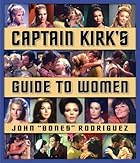
Anyone who knows me, knows how much I don’t like Captain Kirk. He is a braggart who is too good looking for his own good and not as clever as he thinks it is. And I know that this view has been coloured by the actor who plays him, William Shatner, who is too loud and self-centred to have ever been Canadian.

So I was excited to see a book on dating advice based on Captain Kirk. I thought "this will be fun". And . . .

The author has clearly envisioned this book to be both tongue in cheek case study and a book for the Trekkie or Trekker.

And that is one of the biggest problems with this book. It doesn’t know what it wants to be. The author needed to commit to either being a complete encyclopedia of the women Kirk has romanced (in the vein of the Nitpicker’s Guide) or being a parody of the state of romance in Star Trek as viewed through Kirk’s eyes (in the vein of Sev Trek). Because the author has not made that choice, the book is not very satisfying.

To be fair, the author did try and group the women according to themes, the seducers, those with self-esteem problems, and the ex-partners. But in doing so he missed at least one very obvious one, Carole Marcus, the mother of Kirk’s only known son. There are other women Kirk has romanced, but they do not appear here. So if you are an encyclopedic Trekkie, this is not the book for you. And while there are smiles, this is not a laugh slap riot.

I found it not really worth it.

Google Dumps the CAPS LOCK Key

[ Happy Mood: Happy ]
So Google has produced a new keyboard for their OS computer, and in a stunning, albeit self-serving move, they have eliminated the CAPS LOCK key. Instead you get a dedicated search key. Guess what you use to search?

Now to say that this has gotten people a little over stimulated would be an understatement. Why just this morning, CBC had a debate feature Grammar Girl and some tech expert debating the usefulness of the CAPS Lock key.

I will be blunt in my analysis, everyone is making a mountain out of a molehill.

Yes, Google is an industry leader. People look to them for trends and the like, but what many have failed to point out is that this is a branding exercise. Has Google replaced the CAPS LOCK with some new, more useful key? Say an interrobang? Or please unsend that email? Or how about an egosurfing button to monitor my minute-by-minute popularity? No. It launches a search engine, most likely Google. No doubt we will have similar initiatives from Microsoft, Apple and Yahoo in the next few years. Heck, I also predict Facebook and Twitter will find a way to get one key access to their sites, that doesn’t involve programming macros, in about the same amount of time.

And really, what is the grievance against the CAPS Lock? That your grandma can’t seem to unclick it? That some snotty, nitpicking jerk on YouTube over uses it? That the accidental hitting of the caps lock key as you type, cause a whole sentence (GASP) to be in CAPS? Well ignore the first one, she’s 80 and doesn’t know any better. And she did make you cookies when you were a kid. Ignore the second one too. Really, they are clueless and have no life. You will not change them. In the third case, imagine how helpful it will be to have a browser window complete with search engine popping up every few minutes instead of the all caps sentence. How useful!

I also do not think, as others do, that this will be the end of CAPS LOCK key. Instead this is a marketing stunt, it is destined to go the way of New Coke and the McDonald’s "I’d Hit It" campaign. Fade away into nothingness. Or at least make the sticky keys option way more popular.

Knuffle Bunny – Series Review

[ Happy Mood: Happy ]
[ Listening to CBC Radio Currently: Listening to CBC Radio ]
I am trying something a little different here. Instead of reviewing one book, I want to look at a picture book series that is, quite frankly, one of the best ever produced.

Mo Willems is one of the best picture book authors/illustrators out on the market. He use to be an animator for Seasame Street, and he brings this experience to the Knuffle Bunny series, mixing photographic backgrounds with his illustrations to tell the story of Trixie and her favourite stuffed animal. (Trixie in this story is losely based on Mo Willems own daughter.)

If you have never seen the series, go get it and read it. Kids or now kids. You won’t be disappointed.

Knuffle Bunny

The story is straightforward. Trixie is a toddler who accompanies her daddy to the laundromat to do the laundry. She "helps" daddy in they way that only toddlers can. On the way home, Trixie realizes she is missing her Knuffle Bunny. She tries to tell her daddy this news, but lacks the language skills to do so. This leads to tears, tantrums and yelling, until Trixie’s mommy figures out what is going on.

Can they find Knuffle Bunny in time?

Knuffle Bunny Too

Knuffle Bunny Too takes up a few years after the first book. Trixie is going to pre-kindergarten and is talking up a storm. She brings her one of a kind Knuffle Bunny to show and tell. Only to find out that another girl in her class has the same bunny.

Through a series of events, Trixie takes home the wrong bunny, which she realizes in the middle of the night. Can Trixie’s parents get her bunny back so everyone can get some sleep.

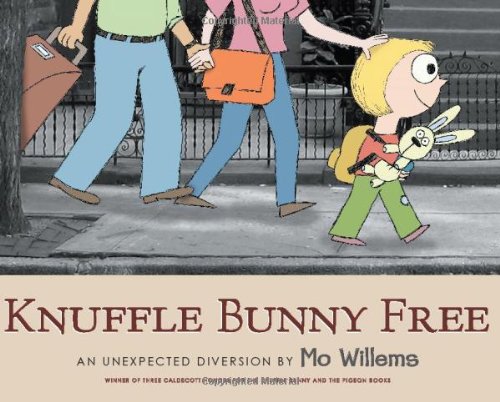
Knuffle Bunny Free

Knuffle Bunny Free finds Trixie and her parents going to the Netherlands (what Willams calls Holland, maybe they are going to the province of Holland) to visit Trixie’s grandparents, Oma and Opa.

At some point during the trip, Trixie misplaces her Knuffle Bunny. This distresses her greatly, and her family tries to help her get over it by telling her how big she is getting and how proud of her they are. Her grandparents even try to distract her with a new rabbit that dances and speaks Dutch.

Nothing helps until Trixie has a dream that Knuffle Bunny is travelling around the world, bringing comfort to many other children. She then comes to accept that Knuffle Bunny is gone. That is until she makes an amazing discovery on the plane going home.

But then the story takes an unexpected turn as Trixie makes a decision that will change her life.

United We Stand – AQR

Eric Walters is a former Canadian teacher who has become a bit of a publishing star. He started writing books to motivate his students to care more about their creative work. In 2006, he published We All Fall Down, a look at what happened inside the Twin Towers on September 11, 2001.

As the sequel, the action picks up the morning of September 12, 2001. Will and his father know that they are lucky to be alive after the collapse of twin towers. Will’s friend James has still not heard from his father, a fireman last seen going up the stairs of tower two to rescue those still trapped above.

The story mostly follows Will as he tries to help James deal with his father being missing, and, increasingly, and, increasingly, assumed dead. Through a variety of events, Will and James end up at ground zero where they both come face to face with the enormity of what has happened.

Walters has done a good job looking at what happens in the aftermath of a large, catastrophic event. He leads the reader through the impact of the terrorist attacks on individual people, neighbourhoods and the city as a whole. He seamlessly weaves real people into his narrative, giving us glimpses of Bush and Guilliani. He also has Will react in a natural way to the trauma he’s been through.

If there is one fault in this book, it is that Walters spends a lot of time on the emotions of the characters, which may alienate fans of the first book who were looking for a similar action based narrative.

Life After God – AQR

[ Happy Mood: Happy ]
[ Watching My son play with blocks Currently: Watching My son play with blocks ]
The original publishing Canadian wunderkind, Douglas Coupland burst onto the publishing scene with his first book, Generation X. He then produced Microserfs. He has made popularized to the point of cliche words like McJobs and Generation X. I am a fan since I first read Generation X back in the early 1990s, and have recently been making a point of reading his back catalogue. So it is with this backgstory that I turned to the book Life After God

A series of vignettes or short stories, rather than a stand alone novel, Life After God is most definitely not one of Douglas Coupland’s greatest works. It is too disjointed, and that is saying something given that Coupland seems to specialize in the disjointed narrative.

Strangely enough, it is the most disjointed part of the book that is the strongest. There Coupland gives us an end of the world, nuclear apocalypse as seen through the eyes of those who are killed by it. Each part of this section of the book describes in painful detail the melting, burning and crushing of the narrators. It is alternatively fascinating and horrifying. The one thing that was missing was emotional investment in the characters. If I had cared about these people more, their end would have had more of an impact.

And therein lies the problem with this book. The reader spends so little time with the narrators of each section that we don’t get to care about them. These characters are interesting, but we don’t spend enough time with them. I know that this was a series of novellas and short stories that Coupland put together on the advice of a publisher, but I would have liked a whole book staring some of these characters. The recently divorced father who is travelling with his child to visit a relative deserves a whole book, and maybe now that Copland is older he might be able to write it. The depressed, off-kilter, possible suicidal narrator at the end of the book (and the group of friends he skinny dipped with) also needs a chance to shine in a longer work.

This was not one of his better works and should probably only be read by completists like me or scholars and academics studying his work.

Skulduggery Pleasant – AQR

[ Happy Mood: Happy ]
[ Currently: Getting ready to go get groceries. ]

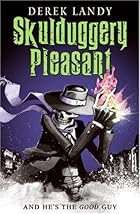
Stephanie Edgely is eleven years old when her beloved Uncle Gordon, a famous (and wealthy) horror novelist dies. He leaves her his mansion and fortune (not to mention the rights to his books – caching!) Unbeknownst to her, he has also left her something that someone thinks is worth killing over. Because, according to his dear friend, Skulduggery Pleasant, Uncle Gordon was murdered.

Skulduggery, easily one of the best names in children’s literature, is a living skeleton He was killed many years ago, but brought himself back to life through his righteous rage. Skulduggery, conveniently a private investigator, helps Stephanie navigate through this new world of magic, monsters and intrigue as they try to figure out what object the bad guys are after.

Author Derek Landy has created a rollicking good read full of puns, slapstick humour and breakneck action. He has also populated this world with well drawn characters. Skulduggery, the title character and real star of this novel is what Harry Dresden would have behaved like if he had been played by Nathan Fillion. Stephanie is also an asset, a strikingly drawn, strong female that drives much of the action rather than being a simple sidekick.

This will end up in an upcoming After Harry.