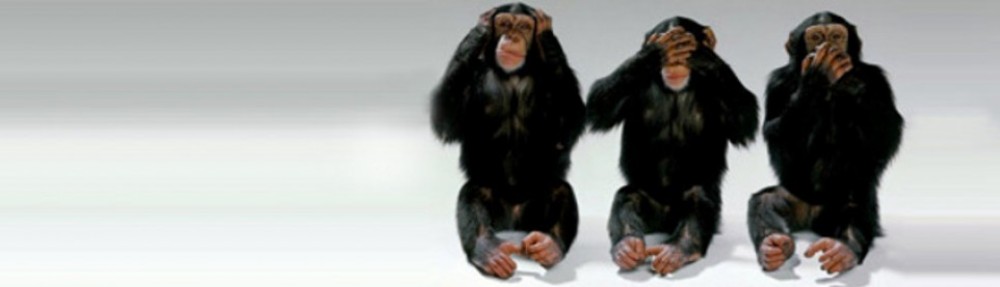
Library Journal reviews THE APES OF WRATH & other news

Middle size Apes cover

The esteemed Library Journal reviewed The Apes of Wrath in their March 15 issue.

The Apes of Wrath. Tachyon. Mar. 2013. 384p.
ed. by Richard Klaw. ISBN 9781616960858. pap. $15.95. FANTASY

Bringing together such classic writers such as Gustav Flaubert (“Quidquid Volueris”), Edgar Allan Poe (“The Murders in the Rue Morgue”), Edgar Rice Burroughs (“Tarzan’s First Love”), Franz Kafka (“A Report to an Academy”), and Robert E. Howard (“Red Shadows”) with modern fantasy and horror authors, editor Klaw, co-owner of Mojo Press, a noted publisher of graphic novels and themed anthologies, has assembled a collection of 13 stories revolving around the great apes and playing upon their similarities to and differences from humans. Including James P. Blaylock’s steampunk comedy of errors (“The Ape-Box Affair”) featuring a space-traveling ape, several bumbling Londoners, and a mysterious silver box or two, and Philip Jose Farmer’s continuation of a classic ape story (“After King Kong Fell”), this volume attests to literature and film’s fascination with our primate cousins. The foreward by Rupert Wyatt, director of Rise of the Planet of the Apes, and a pair of essays by Jess Nevins (“Apes in Literature”) and Rick Klaw (“Gorilla of Your Dreams: A Brief History of Simian Cinema”) make this more than just a curious short-story collection. VERDICT Aficionados of apes in literature and film should enjoy this gathering of new and old stories.

Overall a good review. But why do people have some much trouble spelling “foreword?” Continue reading

I’m interviewed at Suvudu & other Apes news

Matt Staggs, who calls The Apes of Wrath “fantastic,” interviews me for Suvudu about the origin of the book and my longtime fascination with apes.

Okay, why apes? I know you like them, but why, and why create an anthology about them?

The interest started when I was a child with King Kong (the original not the blasphemous 1976 remake) and The Planet of the Apes.Here were humanlike creatures—far more powerful than me who appeared in control but ultimately not. In my youth I identified with that loss of control. My parents divorced when I was very young. My father for all intensive purposes abandoned me. The apes and those lessons made me realize that no matter how grownup (or to my youthful mind “powerful”) and in charge I felt, things could change in a moment’s notice. Much like Kong in chains, I often lashed out to no avail.

Middle size Apes cover

Did you limit yourself to a particular kind of ape? Did some monkeys sneak in? What about ape-like creatures?

My favorites are gorillas, probably coming from my initial love of King Kong. Ape-like creatures can be fun as sometimes monkeys. In this book I chose stories with apes playing a prominent or important role. Much like the presence of an airship doesn’t make it steampunk nor a computer cyberpunk, a tale needs more than just mention of an ape to be an ape story.

Breaks between stories

What are some of your favorite fictional apes from any medium?

Obviously King Kong. Others include the Flash villain Gorilla Grodd, Mojo Jojo from The Powerpuff Girls, Zira from The Planet of the Apes, Joe Young from Mighty Joe Young, Sam Simeon from Angel and the Ape, and Tarzan’s mother Kala.


Check out the rest of it at Suvudu.


Half title page


And in other Apes news this came across the interwebs via Tumblr from AlkthashicArchive:

The Apes of Wrath… Okay pack it up speculative fiction anthologies, go home. We’ve found the best anthology ever.


I’m a humbled by all the positive feedback to the book.

Tobe Hooper and I discuss chainsaws and more

Tobe Hooper on Texas Chainsaw Massacre 3D (and how it all began)

Over at Blastr, I interviewed legendary director Tobe Hooper.

Back in his native Austin, Texas, for a special dual screening of his original 1974 movie and the just-released Texas Chainsaw Massacre 3D at the popular Alamo Drafthouse, Hooper lauded the new incarnation. “Producer Carl Mazzocone has been working on it for about three years, studying why the original film works, by breaking conventions, not doing it as the Hollywood version.” Unlike many of the previous Chainsaw attempts, this iteration, which serves as a direct sequel to the first, managed to remain true to the original concept and characters. Plus, according to Hooper, the “extraordinarily good 3D” actually turned him into a fan. “It’s so different than the 1950s kind of 3D. This has such depth.”

Tobe Hooper on Texas Chainsaw Massacre 3D (and how it all began)

“One of the reasons I got into films was this terrible movie Goodbye Charlie. Tony Curtis gets changed into a dog.” Hooper further explains, “There was one moment that I kinda left my body. It’s hard to explain, but I was mesmerized. It was just one strange moment. Why in the hell did I feel that? If I could take those two seconds and extend that. Have an audience interact in such a way that they will kind of go into that world. If there was a way I could make that last like five minutes, 10 minutes, or even most of the film. I’m still working on that. Though I have pulled it off a couple of times.”

Hooper disagrees with the assessment of some that violent movies are the root cause of recent atrocities such as the Newtown shootings. “Videogames, perhaps. I was into videogames for a while. And things that look like a person do become targets. And their head explodes. I just don’t think a horror movie is gonna draw any copycats. Certainly not someone running around with a chainsaw. Unless it’s a gag.”


Check out the entire conversation over at Blastr.